
Rajasthan travel guide: the places, stories and experiences worth seeking out
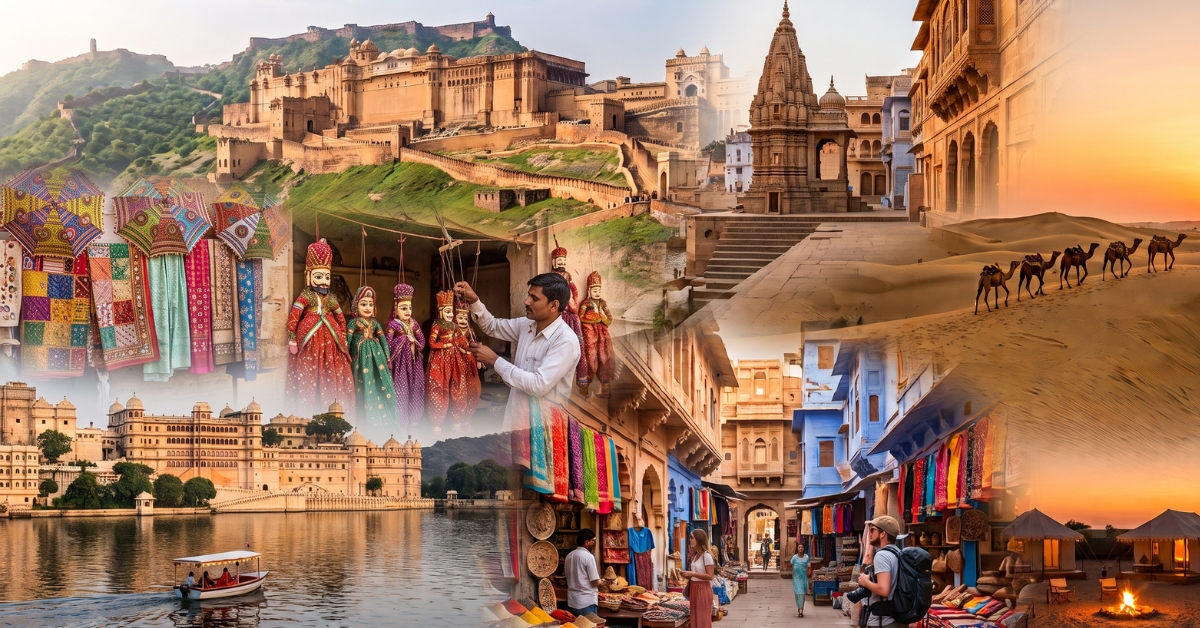
Rajasthan has a way of feeling familiar before you have even been there. You have seen the forts rising above old cities, the palaces around lakes, the painted havelis and photographs of the Thar stretching endlessly into the distance. There is plenty of that, and most of it deserves the attention it gets. But after a few days, it is often something much smaller that you end up remembering.
Maybe it is an artist showing you how much time goes into a miniature painting, or a craftsperson explaining why a particular material has to be prepared in a certain way before they can even start working with it. It might be a market you wandered into without planning to, a meal you had because someone recommended a place, or a neighbourhood that you ended up walking through for far longer than you intended.
That is also what this guide is about. The obvious things are easy enough to find. The harder part is figuring out where to go, how much time to give each place, what is actually worth doing, when to visit and how to get around without spending half the trip in transit. Along the way, we look at the art, crafts, food and people that give these places some of their character.
Understand Rajasthan in One Word
| If you want… | Consider… |
| A first trip to Rajasthan | Jaipur |
| Forts, old-city life and crafts | Jodhpur |
| Lakes, landscapes and painting traditions | Udaipur |
| Desert architecture and the Thar | Jaisalmer |
| Desert history, food and traditional arts | Bikaner |
| Pilgrimage and spiritual traditions | Ajmer & Pushkar |
| Frescoes and historic havelis | Shekhawati |
| Miniature painting and a slower old-town pace | Bundi |
| Wildlife and birdlife | Ranthambore / Bharatpur |
| Hill landscapes and Jain architecture | Kumbhalgarh / Ranakpur |
| Smaller towns and rural Rajasthan | Rural routes and lesser-known towns |
The first rule of planning Rajasthan
Rajasthan is huge, and the distances between the places people usually want to visit can catch you off guard when you start putting an itinerary together. Trains make some of those journeys fairly easy, but you still have to account for the hours spent getting from one city to another. Jaipur and Kota are major railway hubs, while Jaipur, Jodhpur and Udaipur are the main airports. Jaisalmer, Kishangarh and Bikaner have airports as well, though whether they are useful to you depends on the route and connections available.
So before you start adding another city because it looks close on the map, it helps to think about how much time you actually have:
- Three days: Stick to one city and give yourself time to actually explore it.
- A week: Two or three destinations is plenty.
- Ten days or more: You can start looking beyond the usual cities and add the desert, smaller towns or a detour that wasn’t originally on the itinerary.
It is tempting to keep adding places when you are planning a Rajasthan trip. The problem is that every extra destination comes with another journey, another check-in and another day spent getting from one place to the next. At some point, you are seeing more names on an itinerary than you are actually seeing Rajasthan.
Where should you go?
It really depends on what you want the trip to feel like. Rajasthan is too large and varied to have one standard way of seeing it, and even the cities that are part of the usual tourist circuit can feel quite different once you spend a couple of days in them.
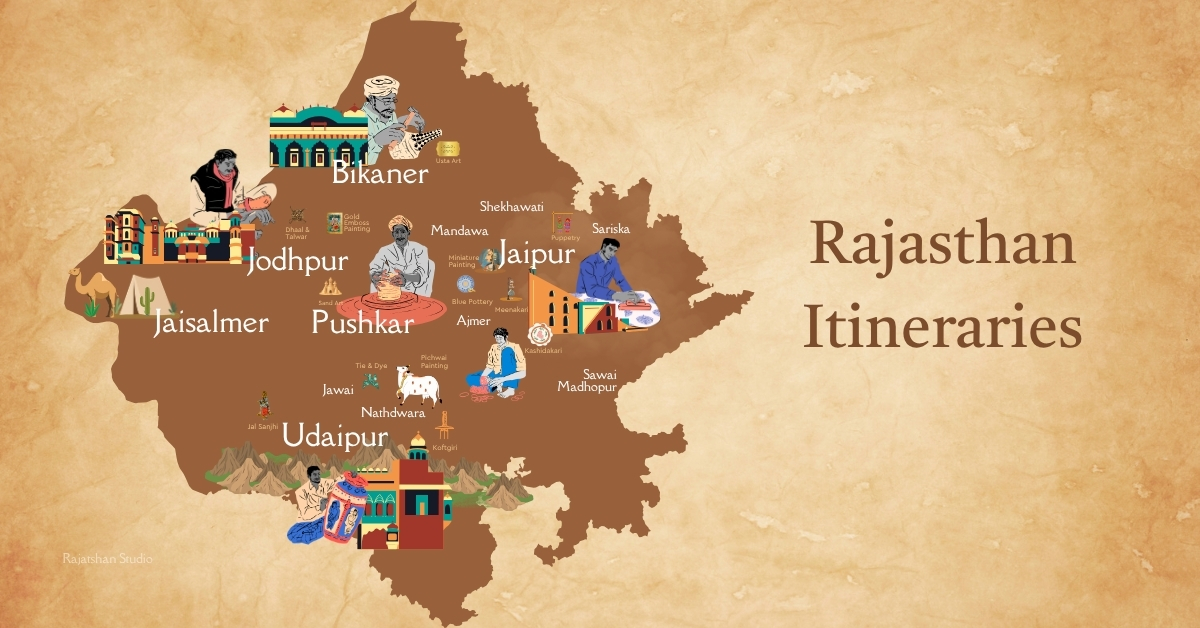
Jaipur is an easy place to begin, especially if you want a mix of architecture, food, markets and crafts. Jodhpur has Mehrangarh and the old city around it, with plenty to explore once you leave the fort behind. Udaipur changes the scenery altogether, with its lakes and the Aravallis shaping much of the city.
Go further west and the desert becomes a much bigger part of the trip. Bikaner and Jaisalmer both have their own histories and traditions, so they are not interchangeable desert stops. Then there are places such as Ajmer and Pushkar, along with smaller towns that are worth considering if you have more time or have already done the usual circuit.
Jaipur
The capital has plenty of the sights you already know about. It includes Amber Fort, City Palace, Hawa Mahal, Jantar Mantar, Nahargarh and Jaigarh. But it is worth leaving some time for the city’s workshops as well.
Block printing, blue pottery, tarkashi wire inlay, lac work, kathputli puppetry and wooden block carving are still practised by working artists in and around the old city. You can see the difference when you spend time with the people actually making these things.
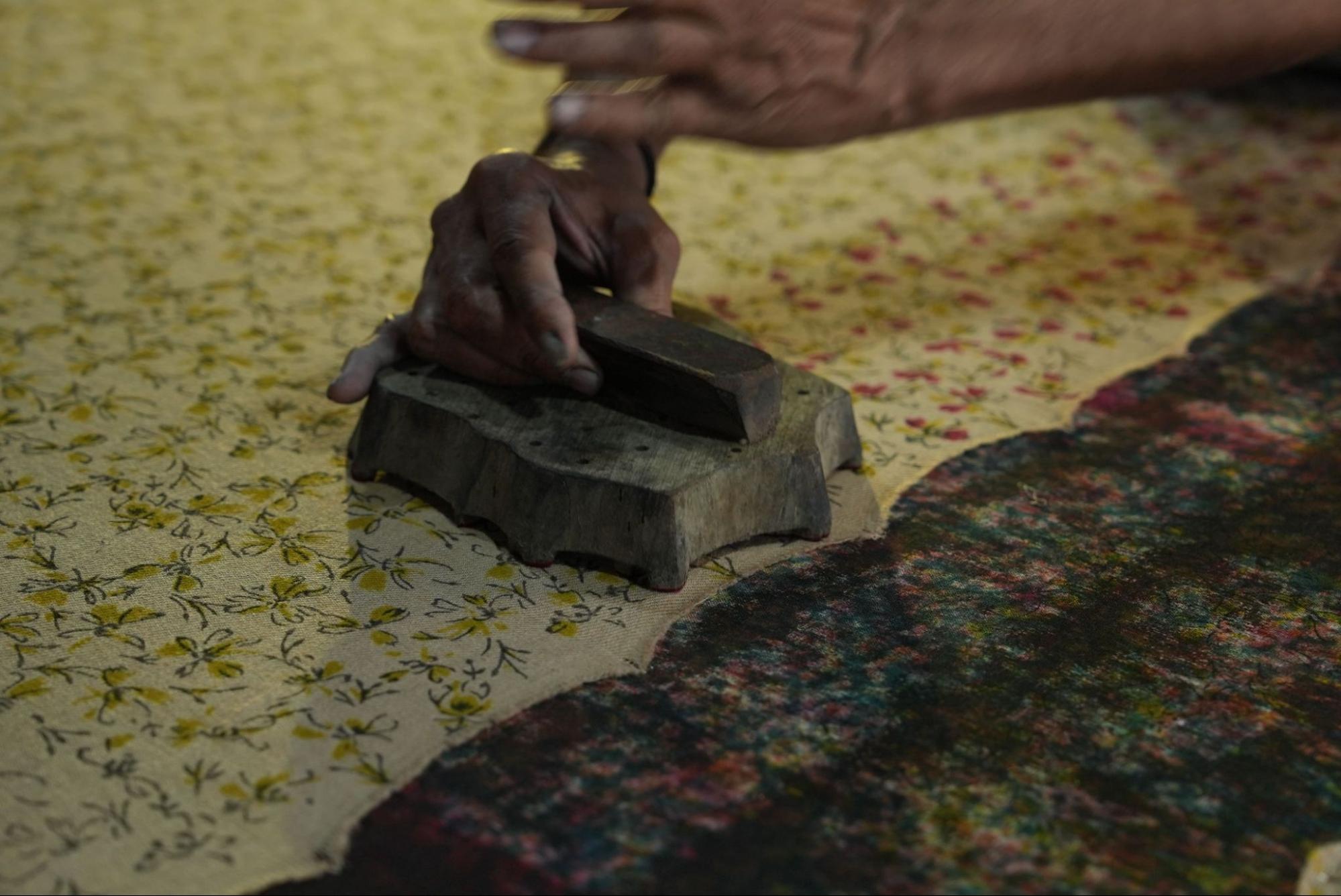
Raj Kumar Pandey has spent his working life practising the Sanganeri tradition of block printing, a craft his family has worked in for seven generations. Gopal Saini’s blue pottery studio is in the part of Jaipur where the craft has been practised for decades. Papu Bhat works with kathputli, where making the puppets and performing with them are closely connected. Spending a couple of hours with his family gives you a much better sense of the tradition than seeing a short puppet performance at a hotel.
Give Jaipur two or three days. Two is enough for the main sights, but if you want to spend time looking at crafts, trying different food and walking through the neighbourhoods, the third day gives you some breathing room. October to March is generally the most comfortable time to visit. April through June gets hot and dry, with afternoon temperatures often crossing 40°C. The monsoon usually arrives between July and September, bringing some relief from the heat along with more humid weather.
The old city is particularly good on foot. The palaces and forts tell you a lot about Jaipur’s history, but the workshops show you what has survived from that history and is still being practised today.
Jodhpur
You will probably spot Mehrangarh Fort before you have properly figured out where you are. It rises above the old city, with the blue-painted houses spreading out below it. The fort is an obvious reason to come to Jodhpur, but once you have been through it, there is plenty of reason to head back down and spend some time in the streets.
The old city has markets, temples, local food, rooftops and workshops, and it is worth walking around without having somewhere else to be. Some of Jodhpur is best seen that way, by turning into a lane because something caught your attention rather than following a list of sights.
There are also craft traditions here that are closely tied to the city’s history. Jodhpur juttis, the traditional leather footwear, received a Geographical Indication tag in 2023. Mohan Lal and Chanda Gujar are among the practitioners who still make them by hand. Vishnu Kumar Lohar works on dhaal and talwar engraving, while Dr Jyothi Swaroop Sharma practises gold emboss painting. Seeing these crafts being made gives you a better sense of their connection to Jodhpur’s history of warrior culture and courtly patronage than simply seeing the finished objects in a shop.
Two days is enough for the major sights, although three makes the trip much easier to enjoy. You can spend more time in the old city, fit in a craft session and still have an afternoon or evening where you are not watching the clock. Winters are pleasant. Summers are dry and extremely hot, with the Thar beginning to make its presence felt around the city.
Udaipur
Udaipur feels quite different from the Rajasthan you get around Jaipur and Jodhpur. The desert gives way to lakes and hills, and water is such a big part of the city that it changes the way the place looks and feels. City Palace, Lake Pichola, Jagdish Temple, Sajjangarh, the ghats and Saheliyon-ki-Bari are the usual places to start, and there is a good reason they keep turning up on itineraries.
If you have an interest in painting, though, it is worth giving Udaipur some extra time. Pichwai painting has been practised in the region for centuries. The large devotional works, traditionally painted on cloth, depict Krishna and can be incredibly detailed, with natural pigments and layers of fine brushwork.
Rajaram Sharma’s studio near the old city is one place to see that process up close. Spending time with the artist gives you a better idea of how the paintings are constructed and why the finished works look the way they do. Kanhaiya Sharma works in miniature painting, another tradition with a long history in the region. Elsewhere, Harsh Chhajed works with seafoam carving, using cuttlefish bone, while Shyamlata Gahlot practises koftgiri, in which gold wire is inlaid into iron.
Three or four days gives you enough time for Udaipur itself and leaves room for Kumbhalgarh or Ranakpur if you want to make either a day trip. The Aravalli hills also make the climate somewhat cooler than the desert cities. From July to September, the monsoon brings more water into the lakes and gives the city a noticeably different look.
Bikaner
Bikaner often gets skipped on a first Rajasthan trip, especially when people are trying to fit Jaipur, Jodhpur, Udaipur and Jaisalmer into the same itinerary. It is worth considering, though, particularly if you are interested in architecture, crafts and the history of the desert cities.
The city grew around trade routes, the desert and its royal court, and you can still see that history in its architecture and artistic traditions. Usta art is probably the most distinctive example. It is a form of gold embossing traditionally done on camel hide and other surfaces, and has been practised in Bikaner for centuries. Ajmal Hussain is one of the practitioners associated with the tradition, which has a long connection with the city’s Mughal-era court.
Junagarh Fort, the Rampuria Havelis, Lalgarh Palace and the old city are the obvious places to start. Give the Rampuria Havelis some time rather than stopping only for the usual photograph. There is a lot going on in the carvings and decorative work, and walking through the surrounding streets gives you a better sense of how the buildings fit into the old city.
One or two days is enough for a first visit. You can stay longer if art or the desert is a bigger part of your trip. Summers in Bikaner are extremely hot, while winter nights can get surprisingly cold. November to February is generally the easiest time to visit.
Jaisalmer
Jaisalmer is where the desert starts to feel like a much bigger part of the trip. The city’s golden sandstone fort rises straight out of the Thar, built from the same stone that gives the surrounding landscape its colour. What makes it especially interesting is that it is still part of everyday life. People live and run shops and businesses inside the fort, so it does not feel like a monument that was simply left behind.
Patwon Ki Haveli, Nathmal Ki Haveli, Salim Singh Ki Haveli and Gadisar Lake are the familiar stops, and they are worth seeing. But leave some time to walk around inside the fort without a particular destination. The houses, shops and everyday activity sitting alongside centuries-old architecture make you look at the fort differently once you realise it is also someone’s neighbourhood.
It is worth being a little selective about the desert experiences outside the city as well. There is plenty of packaged tourism around the dunes, but you do not need much of a sales pitch to understand why the landscape itself is worth spending time in. Give yourself some time away from the staged parts of the experience and the desert starts to feel like a place rather than a backdrop for a photograph.
October to February is generally the most comfortable time to visit. Summers are severely hot, while winter nights can get surprisingly cold, particularly if you are staying out in the desert.
Ajmer and Pushkar
Ajmer is closely associated with the Ajmer Sharif Dargah, the Sufi shrine of Khwaja Moinuddin Chishti, which draws pilgrims from across South Asia. The historic centre, Ana Sagar Lake and the streets around the shrine are worth spending some time in, and a day is enough to see the main parts of the city without rushing through them.
Pushkar revolves around its sacred lake, the Brahma Temple, the ghats and the bazaars around them. Every November, the Pushkar Fair brings together a large livestock fair with a major religious gathering. The camels and the spectacle are a big part of what attracts visitors, but there is more going on around the fair, particularly its connection to pilgrimage and the pastoral communities that have been coming here for generations.
If you are visiting both, one or two days should be enough. Pushkar is particularly worth seeing early in the morning, when the ghats are quieter and you can walk around before the town gets busy.
Beyond the classic circuit
Bundi is one of them. The old town, stepwells, miniature paintings and palace architecture are all fairly easy to explore on foot, and the city still feels much quieter than Rajasthan’s major tourist centres. You can spend a day walking around without feeling like you are trying to get through a checklist of sights.
Shekhawati is another detour, especially if you are interested in architecture. The region is known for its painted havelis, built by merchant families who made their fortunes through businesses spread across India and beyond. The frescoes are remarkable, although many of these buildings are old and maintaining them is becoming an increasingly important issue.
Kumbhalgarh and Ranakpur fit quite naturally into a southern Rajasthan itinerary. Kumbhalgarh is known for its hill fort and the landscape around it, while Ranakpur is home to one of the country’s important Jain temple complexes. The marble carving alone makes it worth giving the temple more time than a quick stop between other destinations.
Ranthambore is a different kind of trip altogether. If you are going for the wildlife, it makes more sense to give the park enough time to be the focus rather than trying to squeeze a safari into a day between two cities.
Further east, Bharatpur and Keoladeo offer another side of Rajasthan, with wetlands and birdlife replacing the forts and desert landscapes that usually dominate Rajasthan itineraries. They also work well as part of a wider north India trip, rather than being treated as another stop on the classic Rajasthan circuit.
How to actually experience Rajasthan
Seeing the famous places is only part of a Rajasthan trip. It helps to give yourself a little more context while you’re there. Start with the place itself: the fort, palace, lake, haveli or old neighbourhood. Then spend some time finding out why it is there and what its history looks like beyond the dates on a plaque. Who built it? Who lived there? What was the city like when it was at its peak?
And then, where possible, meet someone who still works with the traditions you have been seeing. A piece of blue pottery is much easier to appreciate once you have seen how it is made, from the quartz powder and white base to the oxide pigments and two firings. Watching a miniature painter work changes your understanding of the paintings too. A tiny detail such as a lotus can take hours to complete. And with kathputli, learning about the Bhat community and its long relationship with the tradition gives you a very different perspective from simply watching a puppet show.
This is where a Rajasthan Studio experience can fit naturally into a trip. You get to meet a practitioner in their own workspace, hear about the craft from the person who actually works with it, and in many cases try making something yourself. It is a different way of spending an afternoon in Rajasthan, particularly when you’ve already seen the monuments and want to understand some of the traditions that are still being practised around them.
What to look for in Rajasthan’s Art and Craft
You do not need to know everything about Rajasthan’s crafts before you arrive. Even a little context can change what you notice when you see something being made or pick up a finished piece.
| Art / craft | Where | What to notice |
| Blue pottery | Jaipur | There is no clay in the finished piece. The base uses quartz powder, while cobalt oxide gives the familiar blue colour. |
| Block printing (Sanganeri) | Jaipur | Look at the hand-carved wooden blocks, the dyes and the way several prints are layered to build the design. |
| Tarkashi | Jaipur | Silver or brass wire is inlaid into wood. Watch how the surface is prepared before the wire is set into it. |
| Lac work | Jaipur | Notice how colour is built up in layers on turned lac. |
| Miniature painting | Jaipur, Udaipur | Look closely at the scale of the brushwork and the storytelling conventions that differ between regional schools. |
| Usta art | Bikaner | Look at the raised surface created before the gilding, as well as the camel-hide substrate used in the work. |
| Koftgiri | Udaipur | Gold wire is inlaid into iron. Ask the maker about the tools used to prepare the metal surface. |
| Seafoam carving | Udaipur | The material is cuttlefish bone, not foam. Its density and behaviour under the tool are quite different from what the name suggests. |
| Kathputli | Jaipur | Making the puppets and performing with them are closely connected parts of the same tradition. |
| Jutti making | Jodhpur | Look at the leather preparation and regional embroidery styles. The craft also has a Geographical Indication (GI) tag. |
| Embroidery | Across Rajasthan | Techniques, motifs and materials can vary considerably between communities and regions. |
When you are buying a craft, the more useful question is often not “where can I buy this?” but “who made it?” Can the person selling it tell you where it came from? Which workshop or village was it made in? How long does something like this take? Who taught the maker, and is someone younger learning the same practice? Those answers give you a much better sense of what you are actually buying, and of the people and skills behind the object.
Meeting artists
Meeting an artist should give you more than a photograph to take home.
Spend some time asking how they learned the practice, where their materials come from, how their work has changed over the years and which parts of the tradition they feel need to be preserved. You may also hear about the parts they have changed themselves. Traditions survive partly because people keep finding ways to work within them.
And remember that a studio or home workshop is still someone’s personal space. Ask before taking photographs, particularly if you are photographing the artist, their family, their tools or unfinished work.
See Rajasthan Studio experiences for bookable sessions across Jaipur, Jodhpur, Udaipur and Bikaner.
Things to do in Rajasthan beyond sightseeing
Make something yourself. A block-printing session with Raj Kumar Pandey in Jaipur takes roughly two hours, and you leave with something you have actually printed. It gives you a much better sense of the process than watching a finished piece being made in front of a group.
Food deserves the same attention. Rajasthan has plenty of famous dishes, but the food you encounter in everyday homes, markets and local shops can tell you far more about a place. Dal baati churma, laal maas and gatte ki sabzi are obvious starting points, but there is plenty beyond the standard restaurant menu.
What does a household in Bikaner eat for breakfast? Which sweets are associated with Pushkar? What is being sold on the streets of Jodhpur at seven in the morning, before most of the city’s sights have opened?
Walk through a neighbourhood without deciding where you need to end up. Jodhpur’s old city in the morning, for example, feels very different when you are walking through it at eight than when you are looking at it through a car window later in the day.
Pick one craft and give it some time. Learn about the material, watch how it is worked and find out how the maker learned the process. And when you buy something, ask a few questions first. Where was it made? Who made it? How much of the work was done by hand? The answers can change what you think an object is worth.
How many days do you need?
| Duration | What it allows |
| 3 days | One city at a comfortable pace. Jaipur, Udaipur or Jodhpur can each fill three days with major sights and a cultural experience. |
| 4–5 days | Two destinations, such as Jaipur + Jodhpur, Jaipur + Ajmer/Pushkar, Jodhpur + Jaisalmer, or Udaipur with a nearby destination. |
| 6–7 days | Two or three cities. Jaipur + Jodhpur + Udaipur works well for a first trip because the three offer noticeably different landscapes, architecture and craft traditions. |
| 8–10 days | Enough time to add Jaisalmer, Bikaner, Pushkar or a smaller detour without spending most of the trip in transit. |
| 12–14 days | A slower itinerary with more nights in each place, smaller towns, wildlife or a route built around art and craft rather than monuments alone. |
The Rajasthan Studio rule: if adding another destination means giving up a worthwhile day somewhere else, it is probably better left for another trip.
Itinerary ideas
The first Rajasthan trip: Jaipur to Jodhpur to Udaipur. The route gives you different kinds of architecture, landscapes and craft traditions without trying to cover the entire state in one go.
The desert: Jodhpur to Jaisalmer to Bikaner. This gives the western part of Rajasthan enough time to feel like the focus of the trip rather than a quick detour.
Art and craft: Jaipur to Udaipur to Bikaner. Plan the days around artists, studios, museums and craft traditions, with the major monuments providing the historical context.
The slower version: Jaipur to one smaller town to Jodhpur. Fewer hotel changes mean more time to explore each place and leave some room for whatever catches your attention along the way.
Returning travellers: Skip the usual circuit and look further out. Bundi, Shekhawati and Bikaner make one possible route, while Udaipur, Kumbhalgarh and Ranakpur work well together. You can also build an itinerary around particular artists, crafts or traditions instead of choosing cities first.
Explore: Jaipur in 3 days · 7-day Rajasthan itinerary · 10-day slow Rajasthan itinerary · Rajasthan craft trail
When to visit
October to March is the easiest period for most travellers.
The weather is generally comfortable for walking through forts, markets and old cities, although winter nights can be surprisingly cold in the desert. If you are camping in the Thar in December, pack for the night as seriously as you pack for the daytime heat. February and March can be a useful middle ground, with temperatures beginning to rise but generally remaining manageable and fewer visitors than the busiest part of winter.
April through June is much harder. Temperatures in parts of Rajasthan can approach 48°C, so early mornings become much more valuable. Keep the hottest part of the afternoon for indoor experiences, museums or simply a break. Mount Abu, Kumbhalgarh and Ranakpur are also considerably more comfortable than the desert cities during this period.
The monsoon, from July through September, changes the landscape. The Aravalli region becomes greener, the lakes around Udaipur fill up and the state is generally quieter. Udaipur can be particularly appealing during these months if you do not mind the humidity. It is also a different experience at major sights such as Amber Fort, where fewer visitors can make a noticeable difference.
Explore next: Rajasthan by season · Rajasthan travel planning guide
Where to stay
Location can matter more than the category of your hotel. A five-star property on the wrong side of a city can mean getting into a vehicle every time you want to go somewhere.
In Jaipur, staying close to the historic core puts the Pink City, markets and heritage areas within easier reach. In Jodhpur, the old city works well if you want to spend your time walking through markets and neighbourhoods, while properties farther out tend to offer more space at the cost of convenience.
Udaipur gives you a similar choice. Lakeside and old-city properties have easy access to the historic centre and plenty of atmosphere, while staying outside the core can be quieter and more private. Neither is inherently better. They simply suit different kinds of trips.
In Bikaner, a centrally located heritage property fits naturally into a visit focused on the old city and its architecture. In Jaisalmer, think of your city hotel and your desert camp as two separate decisions. If you choose a camp, it is worth asking how large it is, how it deals with water and waste, and how it works with the communities around it.
The most useful place to stay is usually the one that makes it easier to experience the city around you.
Getting around
Trains are a good option wherever a direct connection works with your itinerary. They can be comfortable and economical, and on some routes they make more sense than spending several hours on the road. Check current schedules before fixing the rest of your plans around a particular train.
A private car with a driver becomes more useful when you are travelling between several cities, visiting smaller towns or want to stop along the way. You get considerably more flexibility than you would from a fixed timetable.
Within cities, walk whenever the weather and distance allow it. Jaipur’s market streets, the old neighbourhoods of Jodhpur and the ghats of Udaipur are much easier to appreciate when you are moving through them on foot. Auto-rickshaws work well for shorter journeys, while taxis are useful for longer ones.
Your entry and exit points should follow the route rather than forcing the route to follow your flights. Jaipur makes sense as an entry point for a Jaipur-led itinerary, while a trip beginning in Jaisalmer may make more sense with a direct flight or a connection through Jodhpur. If you are combining Rajasthan with Delhi and Agra, Delhi to Agra to Jaipur creates a straightforward progression. An open-jaw flight, such as flying into Jaipur and out of Udaipur, can also save you from retracing the same route at the end of the trip.
Food
Rajasthan’s food is often reduced to a handful of famous dishes, but those dishes only give you part of the picture.
Food tells you a lot about the environment and the communities that developed around it. Ingredients had to work with the climate, foods needed to be preserved, and different regions developed their own everyday preparations. Dal baati churma, laal maas and gatte ki sabzi deserve their reputation, but there is plenty more to look for.
What does an ordinary household eat for breakfast in Bikaner? Which sweets are associated with Pushkar? What is being sold on the streets of Jodhpur at seven in the morning, before the day’s sightseeing begins?
If food is an important part of your trip, give it some space in the itinerary. A dedicated food experience can tell you considerably more than fitting meals into whatever gaps are left between monuments.
Buying crafts
Rajasthan is one of India’s most rewarding places to buy handmade objects, particularly if you take some time to understand what you are looking at before buying.
Ask who made the object and where. Which village, workshop or community does it come from? How much of the work is done by hand? What materials were used, and how long does something like this take to make? You can also ask how the maker learned the practice and whether someone younger is learning it from them.
These questions are useful because a craft can change from one generation to the next without losing its connection to the tradition that came before it. Once you know something about the process and the person behind the object, buying it becomes a more considered decision rather than simply picking something attractive from a shelf.
Travelling more slowly
Slow travel does not mean skipping the famous places. It means giving yourself enough time to experience them properly.
Stay an extra night if you like a place. In many cases, another morning or evening in a city will give you more than squeezing one more destination into the itinerary.
It can also help to choose a theme for part of the trip. Painting, textiles, architecture, food, photography or music can give you a reason to look more closely at places you might otherwise pass through quickly.
And leave some time open. A local recommendation may take you down a lane you had never heard of. A conversation at a chai stall might lead to an unexpected stop. A museum visit that was supposed to take an hour might turn into three.
Explore next: Slow travel in Rajasthan · How to meet artisans in Rajasthan · How to buy crafts more meaningfully
A better way to plan
Instead of starting with a list of cities, start with what you want from the trip.
Step 1. What kind of Rajasthan do you want? Heritage, art, craft, desert, food, wildlife, spirituality, landscape or a slower pace?
Step 2. Which two or three destinations fit that interest? Start with what you want to experience rather than automatically choosing the most famous cities.
Step 3. How much time does each place deserve? Avoid one-night stays unless the route genuinely requires them.
Step 4. Add one meaningful cultural experience to each destination. Meet an artist, make something, learn a process or spend time understanding a local food tradition.
Step 5. Account for the journeys between cities. Put the actual travel times into your itinerary before adding another destination.
Step 6. Leave some time unplanned. An itinerary should help you organise the trip, not dictate every hour of it.
Rajasthan by traveller type
- First-time visitors: Jaipur + Jodhpur + Udaipur. The three offer enough differences in landscape, architecture and culture to make the route feel varied.
- Art lovers: Jaipur + Udaipur + Bikaner, with the itinerary built around artists, studios, museums and craft traditions.
- Desert: Jodhpur + Jaisalmer + Bikaner, giving western Rajasthan enough time rather than reducing the desert to a single overnight camp.
- Slow travellers: Two cities plus one smaller destination, with several nights in each place and fewer days spent changing hotels.
- Repeat visitors: Look beyond the classic circuit. Bundi, Shekhawati, Kumbhalgarh, Ranakpur, smaller Marwar towns, craft communities and wildlife all give you different ways into Rajasthan.
Frequently asked questions
Six or seven days is enough for two or three major destinations. Ten days gives you room for a more substantial route, while twelve to fourteen days makes it easier to slow down and include smaller places or specific interests. With a state this large, you can always find somewhere else to add.
Jaipur, Jodhpur and Udaipur make a useful first combination because each has a distinct landscape, architectural character and craft tradition. If the desert is an important part of the trip, Jaisalmer can be added to the route.
Generally, yes. Major destinations are connected by rail, road and air. The bigger consideration is distance. Rajasthan is a large state, so the number of places you can comfortably visit depends as much on the time spent travelling between them as the number of transport options available.
October to March is the most straightforward period for a first trip, particularly if you plan to spend a lot of time outdoors. Summer is extremely hot across much of the state. The monsoon is quieter and greener, and can be a good choice for travellers who prefer fewer crowds and do not mind the humidity.
Forts and palaces are an obvious starting point, but there is much more to explore. Painting, textiles, pottery, jewellery, puppetry, music, food, pilgrimage and living craft communities all form part of Rajasthan’s cultural landscape.
Jaipur has a particularly broad range of traditions, including blue pottery, block printing, tarkashi, lac work, kathputli and wooden block carving. Udaipur and Bikaner have their own distinct traditions, while Jodhpur and other cities have long-standing craft practices of their own.
You can do both. Artist-led sessions and hands-on workshops are available across Rajasthan, including bookable sessions through Rajasthan Studio with practising artists. Many sessions run for two to three hours and include an opportunity to make something yourself.
Jaisalmer is particularly relevant if you are interested in sandstone architecture, desert landscapes and living heritage. Give yourself enough time to explore the fort as an inhabited neighbourhood rather than treating it as another monument to photograph and leave.
A car and driver can be useful for multi-city routes, smaller towns and itineraries where you want to stop between destinations. If a direct train connects the places on your route, however, the train may be simpler and more economical.
Where should I stay?
That depends on the experience you want. Historic cores and old-city areas are useful for walkability and atmosphere, while properties outside the centre tend to offer more space and quiet. Heritage properties can also add something to the experience when the building itself has a connection to the place.
The Rajasthan Studio way
A place becomes easier to understand when you meet some of the people who keep its traditions going. A fort can give you the history of a city, but spending time with someone who has inherited a craft or built a practice around it can fill in a different part of the picture.
Try carving your first wooden printing block with Gayur Ahmed before seeing what the finished block-printed fabric looks like. Watch Rajaram Sharma apply a single line of Pichwai pigment and pay attention to the brush, the pressure and the pace of the work. Spend time with Papu Bhat’s family and you begin to understand kathputli as a performing tradition in which the puppet is part of a much larger practice.
Sometimes the experience is even simpler. You slow down, stay somewhere a little longer and notice something you would have missed while moving from one monument to the next.
Rajasthan has more than enough places worth seeing. Spending time with the people, crafts and stories behind them can change the way you remember the journey.
Don’t just visit Rajasthan. Follow a story.
Start exploring Rajasthan
By destination: Jaipur · Jodhpur · Udaipur · Bikaner · Jaisalmer · Ajmer · Pushkar · Bundi · Shekhawati · Ranthambore
By art and craft: Traditional arts and crafts of Rajasthan · Painting traditions · Textile traditions · Decorative arts · Craft processes
By people: Artists of Rajasthan · Artist stories · Meet the makers · Contemporary practitioners
By travel style: Slow travel in Rajasthan · Art and culture travel · Responsible travel · Food experiences · Craft experiences
By planning: Rajasthan itineraries · Rajasthan by season · How to travel around Rajasthan · Where to stay in Rajasthan · Rajasthan travel tips
Recent Posts


Looking for Experiences?
Please feel free to contact us, and we’ll get back to you soon!
Related Posts
Not every traveller wants the same Rajasthan. For a first-time visitor, the appeal is usually...
We sat down with master artisan Raj Kumar Pandey, a seventh-generation block-printing expert with over...

Jaipur, the “Pink City of India,” is known for its rich heritage, royal history, exquisite...