
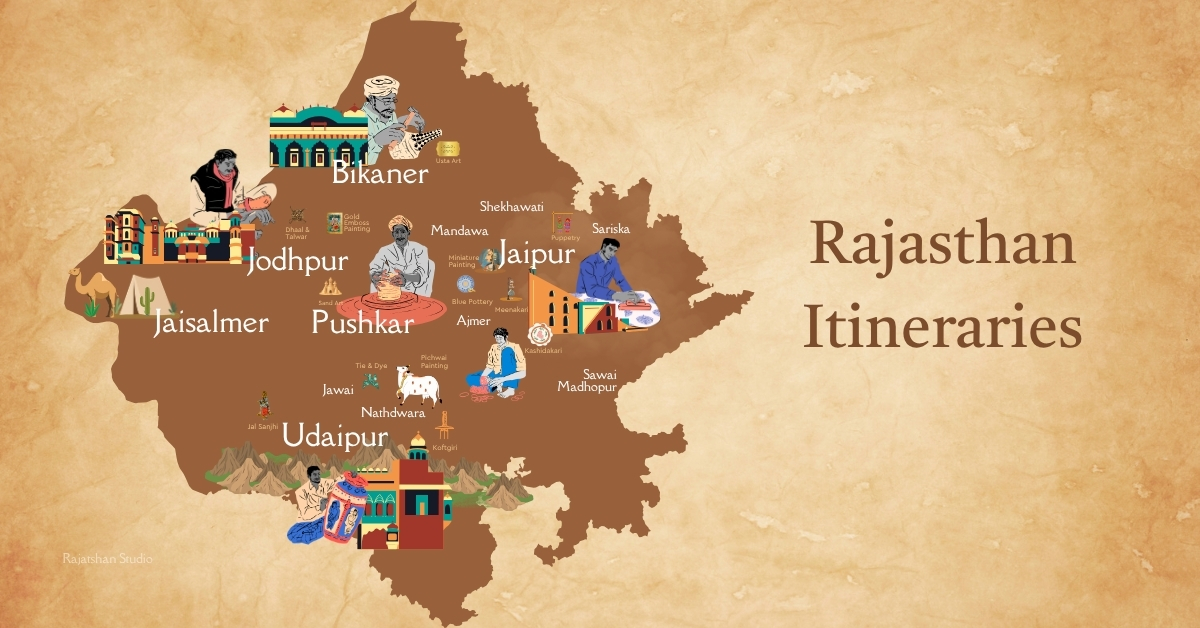
Rajasthan Itineraries for Every Kind of Traveller
Not every traveller wants the same Rajasthan. For a first-time visitor, the appeal is usually the big introduction. They want Jaipur’s palaces and bazaars, Jodhpur’s fort and blue-painted old city, Udaipur’s lakes and grand residences. Someone returning to Rajasthan might have already seen the famous forts and want to spend more time with artists, makers and smaller towns instead. Families need a different pace altogether, while travellers with only three or four days have to decide what is actually worth keeping and what can wait for another trip.
That is why planning a Rajasthan itinerary is less about trying to fit every famous city into one route and more about deciding what kind of trip you want first. The distances between the major cities are manageable, but they are still large enough for a badly planned route to turn a holiday into a succession of hotel check-ins and long drives. Adding one more city can look harmless on a map and still cost half a day once the actual journey is factored in.
The routes below are built around different ways of travelling through Rajasthan. There is a seven-day route for a first visit, a longer itinerary for travellers who want to make art and craft a bigger part of the trip, a slower route with fewer changes, a family itinerary, a four-day Jaipur plan and a fourteen-day circuit for anyone with enough time to see Rajasthan without rushing through it. The day-by-day plans are meant as starting points rather than fixed schedules, so there is room to remove a workshop, leave an afternoon empty or spend longer somewhere that turns out to be more interesting than expected.
Rajasthan Itineraries at a Glance
| Route | Cities | Duration | Best for |
| First-timer route | Jaipur, Jodhpur, Udaipur | 7 days | A first introduction to Rajasthan |
| Art lover route | Jaipur, Udaipur, Bikaner | 9 days | Travellers interested in artists, painting and craft |
| Slow travel route | Jaipur, Bundi, Jodhpur | 10 days | Fewer hotel changes and more time in each place |
| Family route | Jaipur, Jodhpur | 6 days | Families travelling with children |
| Short trip | Jaipur | 4 days | A first taste of Rajasthan with limited time |
| Long trip | Jaipur, Jodhpur, Jaisalmer, Bikaner, Udaipur | 14 days | Travellers looking for a broader Rajasthan circuit |
First-Timer Route
Jaipur, Jodhpur and Udaipur in 7 Days
For a first trip to Rajasthan, Jaipur, Jodhpur and Udaipur remain one of the easiest combinations to recommend. The three cities offer very different experiences, which matters when the trip is only a week long. Jaipur gives you the grandest introduction to the state’s royal architecture and craft traditions, Jodhpur has Mehrangarh and the blue lanes of the old city, while Udaipur changes the pace with its lakes, palaces and Mewar history.
The route also works without making every day a travel day. Jaipur to Jodhpur takes roughly five to six hours by road or train, while Jodhpur to Udaipur is around five hours by road. If flights line up well, flying into Jaipur and leaving from Udaipur also avoids having to return to the starting point.
Best season: October to March, particularly if the itinerary involves a lot of walking and daytime sightseeing.
Day 1 | Jaipur
Keep the first day relatively easy. After checking in, spend the evening walking through the Pink City rather than trying to cover several monuments before dinner. Hawa Mahal works well as the first stop because the facade can be seen from the street, after which Johari Bazaar and Bapu Bazaar give a quick introduction to Jaipur’s jewellery, textiles and everyday market life.
An early-morning heritage walk can also be a good way to begin the trip if wandering through the old city alone feels a little aimless. The point of the first evening is simply to get a sense of Jaipur before filling the following days with sightseeing.
Day 2 | Jaipur
Start with Amber Fort and Jaigarh Fort in the morning, when the temperature is easier to manage and there is enough time to explore the fort complex properly. The afternoon can then go in one of two directions. Travellers who want something active can take an early cycling ride through the old city’s lanes, while anyone interested in Rajasthan’s craft traditions can spend the afternoon learning the basics of Block Printing or Blue Pottery.
A workshop works particularly well here because it changes the rhythm of the trip. Instead of spending the entire day moving from one monument to another, there is a few-hour stretch spent with a maker, seeing how the materials are handled and actually trying the process. Rajasthan Studio’s Jaipur experiences cover several such traditions, so this is also a good city to make the first craft experience of the trip.
Day 3 | Jaipur
Keep the morning for City Palace and Jantar Mantar. These two places are close enough to combine without spending half the day travelling across the city, and both add some context to the royal history that Amber introduces.
Later in the afternoon, head towards Nahargarh Fort for the view across Jaipur as the light changes. The fort does not need to become another rushed sightseeing stop, particularly after two fairly full days in the city. If the weather is good, the view itself can be the reason for going.
Day 4 | Jodhpur
Travel to Jodhpur in the morning and keep the rest of the day light. After checking in, walk towards the old city and get the first view of Mehrangarh Fort from below rather than trying to see the entire monument immediately.
Jodhpur is one of those cities where the surroundings are as interesting as the major attraction, so there is no real need to schedule a long list of sights on arrival day. The Clock Tower area and the streets around Sardar Market are enough for the first evening.
Day 5 | Jodhpur
Give Mehrangarh a proper morning. The fort is large enough to justify several hours, particularly if there is an interest in its courtyards, collections and views over the old city. Once the heat starts building, move back towards the Clock Tower and Sardar Market for the afternoon.
This is also a good place to bring in another hands-on experience. A Jutti Making experience introduces one of the crafts closely associated with Rajasthan and Jodhpur, while Gold Emboss Painting offers a completely different kind of making. Both are better suited to an afternoon than trying to squeeze another major monument into the same few hours.
Day 6 | Udaipur
Travel to Udaipur in the morning and use the afternoon for the City Palace before heading out for an evening boat ride on Lake Pichola. The change from Jodhpur’s dry, dense old city to Udaipur’s lake landscape makes the final part of the itinerary feel different rather than like another version of the same Rajasthan sightseeing day.
If the journey into Udaipur takes longer than expected, keep the plan flexible. The boat ride can remain the evening activity while the palace visit can move to the following morning.
Day 7 | Udaipur
Start with Jagdish Temple and Saheliyon-ki-Bari, then spend the afternoon around one of Udaipur’s painting traditions. A Pichwai Painting experience works particularly well for travellers who want to understand one of the city’s most distinctive art forms, while a Miniature Painting experience offers another route into the region’s painting traditions.
End the trip with a home-cooked Rajasthani meal if one is available through a trusted local host. It is a quieter way to finish a week that has otherwise been built around forts, markets and monuments.
A note on pacing: the craft sessions in Jaipur and Udaipur are additions rather than obligations. If workshops are not the reason for the trip, replace one with a cycling ride, heritage walk or simply more time in the old city. A Rajasthan itinerary becomes tiring when every free afternoon is treated as an opportunity to add another activity.
Art Lover Route
Jaipur, Udaipur and Bikaner in 9 Days
Rajasthan’s artistic traditions are spread across the state, so an art-focused trip should not simply be the usual fort circuit with a workshop added at the end of each day. Jaipur, Udaipur and Bikaner each offer a different entry point into the state’s visual culture. Jaipur has a wide range of working crafts and painting traditions, Udaipur is closely associated with Pichwai and other forms of painting and metalwork, while Bikaner has its own miniature tradition and the distinctive Usta style.
This route involves a longer transfer between Udaipur and Bikaner than the first-timer route, so it is worth treating the journey as part of the itinerary rather than pretending the cities are close neighbours. If flights or a different transport combination work better on the dates of travel, use them. The point of this route is the time spent with artists, not collecting another long road journey.
Best season: October to February, when the cooler weather makes the outdoor parts of the route easier, particularly in Bikaner.
Day 1 | Jaipur
Arrive in Jaipur and keep the first afternoon for City Palace and Hawa Mahal. The city has enough going on without trying to begin the trip with a workshop immediately after landing.
Spend the evening in the old city and pay attention to the smaller details around the bazaars. The point of the first day is to start noticing the materials, patterns and objects that keep appearing across Rajasthan’s craft traditions.
Day 2 | Jaipur
Make this the first proper craft day. A Meenakari experience in the morning followed by a Miniature Painting experience in the afternoon creates an interesting contrast between jewellery work and painting. Both demand patience and close attention, but the techniques and finished objects are very different.
There is no need to add another major sightseeing stop between the two. A slower lunch and a little time in the surrounding neighbourhoods will make the day feel much less like a workshop checklist.
Day 3 | Jaipur
Spend the morning at Amber Fort and leave the afternoon open for Jaipur’s older craft neighbourhoods and markets. This is a good day to look beyond the finished objects in shop windows and notice the work happening behind them.
If there is a particular craft that caught your attention on day two, this is also a useful point to revisit it, whether that means spending more time shopping for a particular object or simply finding out more about how it is made.
Day 4 | Udaipur
Travel to Udaipur and keep the first evening easy. Lake Pichola is the obvious place to spend the evening, but there is no need to turn the arrival day into another sightseeing marathon.
Udaipur changes the character of the trip. The city has a strong painting tradition, but its lakefront setting also gives the itinerary a little breathing room after three days in Jaipur.
Day 5 | Udaipur
Start around Jagdish Temple and then spend the afternoon with a Pichwai Painting experience. Pichwai is particularly worth experiencing this way because the finished paintings can make the tradition look deceptively simple when seen only as objects in a gallery or shop.
Meeting an artist and watching the process makes the scale, detail and patience involved much easier to understand. It also gives the trip a more direct connection to the people still practising these traditions rather than treating them as something that belongs entirely to the past.
Day 6 | Udaipur
Use the morning for a Koftgiri experience, then leave the late afternoon for a cycling ride around the lake or a relaxed visit to Saheliyon-ki-Bari. Koftgiri brings a completely different material language into the trip, which is useful after a few days dominated by painting and textile-related crafts.
If the workshop takes longer than expected or the weather is particularly warm, drop the cycling and simply spend the evening around the lake. There is no prize for fitting both into the same day.
Day 7 | Bikaner
Treat the journey to Bikaner as a travel day. Arrive in the evening and take a short walk around the old city if there is enough daylight, rather than planning a major sightseeing session after the transfer.
Bikaner is particularly useful on an art-focused itinerary because its artistic traditions feel different from what has already been encountered in Jaipur and Udaipur. The city also has a quieter atmosphere in comparison with Rajasthan’s more heavily visited destinations.
Day 8 | Bikaner
This is the main art day in Bikaner. A Usta Art experience introduces one of the city’s signature traditions, while the afternoon can be spent around the Rampuria Havelis and old city.
The current Rajasthan Studio experience catalogue also includes Botanical Miniature Painting with Mahaveer Swami, a three-hour experience built around Bikaner-style miniature painting and botanical themes. It is a particularly good option for anyone more interested in painting than decorative craft.
Day 9 | Bikaner
Keep the final morning lighter. Junagarh Fort is the obvious choice if there is still a major sight to see, while the Camel Breeding Farm can work for travellers who want something different before leaving.
If the trip has already included several workshops, there is no need to squeeze another one in. The last morning is often better spent buying something that actually caught the traveller’s eye during the trip.
A note on pacing: four craft sessions in nine days is a lot. That is fine for someone travelling specifically for art, but there is no reason to complete every workshop simply because it appears in the itinerary. Drop one if the trip starts feeling like a series of classes rather than a holiday.
Slow Travel Route
Jaipur, Bundi and Jodhpur in 10 Days
Slow travel in Rajasthan does not mean finding a remote village and refusing to leave the hotel. It can simply mean resisting the urge to change cities every two days. This route keeps Jaipur and Jodhpur but puts a smaller town in the middle, creating a stretch where the itinerary deliberately becomes less demanding.
Bundi is the stronger choice here because its smaller scale works well with this idea. The old lanes, stepwells, palace and surrounding hills can be explored without the same pressure to tick off a long list of attractions. Travellers more interested in painted havelis and architecture can use Shekhawati instead, particularly around Mandawa and Nawalgarh, but it works as a different kind of slow-travel stop rather than a direct substitute for Bundi.
Best season: October to March for the main cities. September can also work for the smaller-town portion if the weather and local conditions are favourable.
Day 1 | Jaipur
Arrive in Jaipur and do almost nothing. Check in, have dinner and take an evening walk if the energy is there. This can sound strange in an itinerary that has ten days to work with, but the first day is deliberately empty. Starting a slow trip by immediately filling every available hour defeats the purpose.
Day 2 | Jaipur
Take an unhurried morning around Amber Fort. There is no need to decide in advance exactly when to leave. Spend the afternoon wherever the mood takes you, whether that means a cafe, a market or simply returning to the hotel.
Day 3 | Jaipur
Make this the main craft day in Jaipur. A longer Block Printing or Wooden Block Making experience gives enough time to understand the process rather than rushing through a short demonstration. The advantage of this kind of experience on a slow itinerary is the extra time around it. There is room to speak with the artisan, ask questions, look at finished work and then have an ordinary afternoon afterwards without feeling that something else has to be checked off.
Day 4 | Jaipur
Visit City Palace and Hawa Mahal at a comfortable pace, then spend the afternoon around Johari Bazaar or another part of the old city that caught your attention earlier in the trip. Do not turn the shopping portion into a mission. Rajasthan’s bazaars are more enjoyable when there is enough time to stop at something unexpected rather than following a list of shops.
Day 5 | Bundi
Travel to Bundi in the morning and spend the afternoon wandering through the old town. The stepwells and painted architecture are the obvious places to begin, but this is exactly the kind of day where the route should leave some space between the major sights. If Shekhawati is chosen instead, use the afternoon for Mandawa or Nawalgarh and the surrounding havelis. The experience will be more architecture and fresco focused, while Bundi is better suited to a quieter, more compact town experience.
Day 6 | Bundi
Leave the day mostly unplanned. A short village walk, an easy hike into the surrounding hills or simply another wander through Bundi can fill the day depending on energy levels. This is the one day in the entire itinerary where doing less should genuinely be treated as the plan. If a traveller spends the afternoon sitting somewhere with a book after visiting one stepwell in the morning, the itinerary has not failed.
Day 7 | Jodhpur
Travel to Jodhpur and arrive in the afternoon. Use the remaining daylight for the first view of Mehrangarh from the old city and a walk through the blue-painted lanes.
Day 8 | Jodhpur
Spend the morning inside Mehrangarh without trying to combine it with three other attractions. The fort deserves time on its own. The afternoon can then be spent walking through the old city without a fixed destination. Jodhpur is particularly good for this because the streets around Mehrangarh change quickly from busy market areas to quieter residential lanes.
Day 9 | Jodhpur
Choose between a Jutti Making experience and Gold Emboss Painting in the morning. The former brings the trip back to a craft associated closely with Jodhpur, while the latter offers a more visual and decorative tradition. The Gold Emboss experience currently runs for around three hours and is suitable for visitors from the age of six, making it a relatively flexible option for mixed-age groups.
Spend the afternoon on a rooftop or in a cafe overlooking the old city, then finish with a home-cooked Rajasthani meal if a suitable local experience is available.
Day 10 | Jodhpur
Leave the final morning open. Visit Jaswant Thada if it was missed earlier, return to a market, buy something that you had been thinking about or simply have a long breakfast before leaving. A slow itinerary needs an ending that does not feel like a race to the airport.
Family Route
Jaipur and Jodhpur in 6 Days
Jaipur and Jodhpur are a good combination for families because neither city requires the entire day to be spent moving between attractions. There are forts and palaces for adults, markets and streets to explore, and enough hands-on activities to give children a break from looking at monuments.
The biggest difference between a family itinerary and a standard Rajasthan itinerary is not the number of sights. It is the amount of empty space between them. Children get tired, meals take longer, weather changes plans and sometimes a supposedly exciting attraction simply does not land. The route should leave room for that.
Best season: October to February, when daytime sightseeing is generally easier.
Day 1 | Jaipur
Arrive and keep the evening simple. Hawa Mahal makes an easy first stop because it can be seen from outside without committing the family to another long museum visit.
After that, have dinner and call it a day. There is plenty of time for sightseeing tomorrow.
Day 2 | Jaipur
Start with Amber Fort and give the family enough time to explore rather than trying to add every nearby fort to the same morning. The afternoon can be spent at a Kathputli experience, which gives children something visual and interactive after several hours of looking at architecture.
It also gives adults a chance to understand one of Rajasthan’s performance traditions rather than treating puppetry as a souvenir category.
Day 3 | Jaipur
Spend the morning at City Palace and then keep the afternoon for Clay Sculpting. It works particularly well with younger children because the activity is physical and hands-on rather than another guided tour.
If the children are older, this can be swapped for another craft experience such as Miniature Painting or Blue Pottery. The important thing is to choose one activity rather than trying to keep every member of the family occupied with a different one.
Day 4 | Jodhpur
Travel to Jodhpur and treat the journey as the main activity for the morning. After checking in, see Mehrangarh from below and spend some time around the old city.
There is no need to enter the fort on arrival day. Saving it for the following morning means the family can arrive, eat and settle in without immediately starting another sightseeing session.
Day 5 | Jodhpur
Spend the morning inside Mehrangarh, then head towards the Clock Tower and Sardar Market. Leave enough time for a sweet shop stop or an unplanned snack because these small breaks are often easier to remember than another formal sightseeing stop.
A family-friendly cooking session can make a good evening activity, particularly if children can participate in rolling dough or shaping something themselves. Keep this optional, though. After a full day, dinner at the hotel can be the better choice.
Day 6 | Jodhpur
Use the final morning for Jaswant Thada if the family still has the energy for another sight. Otherwise, have breakfast slowly and leave some time before departure.
Kathputli, Clay Sculpting and a cooking session are all useful options, but a six-day family trip does not need all three. Pick the one that suits the children’s ages and interests and let the rest go.
Short Trip
Jaipur in 4 Days
If there are only three or four days available, resist the urge to add a second city simply because Rajasthan is large. Jaipur is the strongest single-city choice for a short first trip because it has a major airport and enough forts, palaces, markets, neighbourhoods and craft traditions to fill several days without constant transfers.
The trick is to accept that this is a Jaipur trip, not a rushed Rajasthan tour. Jodhpur and Udaipur can wait.
Best season: October to March is easiest, although Jaipur can be visited throughout the year with sensible planning around the heat.
Day 1 | Jaipur
Arrive and take an orientation walk through the Pink City. See Hawa Mahal from the street, then spend the evening around the markets.
There is no reason to schedule a museum or fort on arrival day unless the flight or train gets in early enough to make it comfortable.
Day 2 | Jaipur
Spend the morning at Amber Fort. In the afternoon, choose a Blue Pottery or Block Printing experience and spend the rest of the evening around the old city.
This is one of the better uses of a short trip because the workshop gives the afternoon a clear activity without requiring another long journey across Jaipur.
Day 3 | Jaipur
Visit City Palace and Jantar Mantar in the morning, then spend the afternoon around the bazaars. Johari Bazaar is the obvious place for jewellery, while Bapu Bazaar is useful for textiles and other everyday souvenirs.
Leave some time to wander rather than treating the markets as a shopping checklist.
Day 4 | Jaipur
If the timing works, visit Nahargarh Fort around sunset. If it does not, keep the final morning slow and use the time for one last walk through the Pink City before leaving.
The craft session on day two is also optional. A cycling ride, heritage walk or several extra hours in the bazaars can easily replace it.
Long Trip
Jaipur, Jodhpur, Jaisalmer, Bikaner and Udaipur in 14 Days
Two weeks finally gives Rajasthan enough breathing room for a broader circuit. Jaipur, Jodhpur, Jaisalmer, Bikaner and Udaipur cover a substantial part of the state’s most visited western and southern destinations, but the route works only if the longer transfers are accepted as real travel days.
The advantage of having fourteen days is that there is no need to see everything on arrival. Jaipur can have three days, Jaisalmer can have two, and Udaipur can provide the slower final stretch of the trip. Rajasthan Tourism also uses combinations of Jaipur, Bikaner, Jaisalmer, Jodhpur and Udaipur in its broader circuits, so the overall sequence is well established.
Best season: October to February is the most comfortable choice, particularly because this route includes the desert cities.
Days 1-3 | Jaipur
Use the first three days for the Pink City, Amber Fort, City Palace and Jantar Mantar. Put a Block Printing or Meenakari experience into the second day so that the Jaipur portion is not entirely monument focused.
Three days also gives enough time for a market afternoon and a little flexibility around the fort visits.
Days 4-6 | Jodhpur
Travel to Jodhpur and use the first afternoon for the old city. The following day can be devoted to Mehrangarh, followed by the Clock Tower and Sardar Market.
On day six, choose a Jutti Making or Gold Emboss Painting experience before leaving some time for the blue lanes. There is no need to schedule another major monument after the workshop.
Days 7-8 | Jaisalmer
Give Jaisalmer a full day rather than treating it as an overnight stop on the way to somewhere else. Spend the first day inside the living fort, walking through its lanes, temples and havelis.
The second day can include Patwon Ki Haveli and other old-city sights before heading towards the dunes outside Jaisalmer for a sunset desert safari. Choose the operator carefully rather than treating every camel or jeep safari as interchangeable. A smaller operation that is considerate of the landscape and local communities is preferable to one that treats the desert as a photo backdrop.
Days 9-10 | Bikaner
Travel to Bikaner and keep the arrival day relatively light. Junagarh Fort and the Rampuria Havelis can then fill the following day.
This is also where the art-focused side of the itinerary returns. A Usta Art experience gives the city a stronger reason to be on the route beyond simply adding another fort to the list. Rajasthan Studio currently also offers Botanical Miniature Painting with artist Mahaveer Swami, a three-hour experience that explores Bikaner-style miniature painting through botanical themes.
Days 11-13 | Udaipur
Bikaner to Udaipur is one of the longest transfers in this itinerary, so treat it as a proper travel day rather than trying to fit meaningful sightseeing around the journey. Once in Udaipur, the slower pace can begin again.
Use the next two days for City Palace, Jagdish Temple, Lake Pichola and Saheliyon-ki-Bari. Put a Pichwai Painting or Miniature Painting experience into the second day if art is one of the reasons for taking the longer route.
Day 14 | Udaipur
Keep the final morning free. Have breakfast, take one last walk around the lake or return to a place that was missed earlier.
There are already several craft experiences and a desert safari in this itinerary. Adding another activity on the final morning will not improve the trip.
Beyond Craft
Craft experiences are a natural part of Rajasthan Studio’s itineraries, but they do not need to take over the entire trip. Rajasthan is too large and varied for every afternoon to end at a workshop, and some of the best days will have nothing to do with making an object.
Home Cooking
A home-cooked Rajasthani meal with a local family can work particularly well in Jaipur, Jodhpur or Udaipur. It is an evening rather than a full-day activity, which makes it easy to add after sightseeing without changing the route.
For families, it can also be more engaging than another restaurant meal because children can sometimes participate in simple parts of the preparation.
Cycling
An early-morning cycling ride through Jaipur’s old-city lanes is a good way to see the city before the markets become busy. In Udaipur, a late-afternoon ride around the lake roads offers a completely different landscape.
Keep these rides to a couple of hours rather than turning them into an endurance exercise. They work best as another way of seeing a city, not as another major item on the itinerary.
Treks and Nature Walks
The Aravalli landscape around Udaipur, Kumbhalgarh and smaller towns such as Bundi offers opportunities to get away from forts and bazaars for a few hours. These fit naturally into a slow-travel itinerary because they do not require the traveller to move to another city simply to experience a different landscape.
For a longer trip, an extra day around Udaipur can also be kept open for a nature walk rather than being filled with another monument.
Desert Safari
A desert safari around Jaisalmer or Bikaner is one of the more obvious additions to a Rajasthan itinerary, but it is worth being selective. Camel rides and jeep safaris vary considerably in how they are operated, and the biggest or cheapest option is not necessarily the best experience.
A sunset excursion works well because it occupies a defined part of the day and leaves the morning available for the city. Rajasthan Tourism also includes desert safaris in its suggested circuits around Jaisalmer, Bikaner and other parts of western Rajasthan.
Heritage Walking Tours
A guided heritage walk can be useful on the first morning in Jaipur, Jodhpur or Jaisalmer because it gives some context to the streets before exploring them independently.
It can also replace a workshop for travellers who are more interested in architecture and local history than making something themselves. Rajasthan Studio’s wider travel offering is built around experiences that connect visitors with local culture rather than limiting the trip to conventional sightseeing.
Village Visits
A half-day village visit near Jodhpur, Udaipur or Pushkar can work as an alternative to another city attraction, particularly on a longer itinerary. These visits are best arranged through an operator with an established relationship with the community rather than treated as a quick stop where visitors arrive, take photographs and leave.
The same principle applies to craft experiences. Meeting an artist in their working environment tends to offer much more than seeing the finished object in a shop.
None of these activities needs to replace a craft experience. A two-week trip has room for both, while a four-day Jaipur trip probably does not. The useful thing is having enough options to shape the route around what actually interests the traveller.
How to Customise Your Own Rajasthan Itinerary
These six routes are starting points rather than fixed templates. The easiest way to build a different route is to keep the same basic logic and change one part at a time. Start with the reason for the trip. Heritage, art, food, desert landscapes, family time and slow travel will all lead to different choices. There is no need to decide on the cities first and then work backwards to justify them.
Choose two or three cities that support that interest. A fourth city can be worthwhile on a longer trip, but on a short holiday it often costs more time than it adds. Look at the actual travel time. Rajasthan is enormous, and two cities that look relatively close on a map can still take several hours to connect by road. Keep the longest journeys as travel days rather than squeezing sightseeing into the margins.
Add one meaningful experience per city. One afternoon with an artist or craftsperson can be far more memorable than three short activities that leave no time to actually understand any of them. Rajasthan Studio currently offers experiences across Jaipur, Jodhpur, Udaipur and Bikaner, including painting, textile, jewellery, leather and other traditional crafts. Leave some time unplanned.
This matters particularly in Rajasthan because markets, old neighbourhoods and smaller towns reward wandering. A completely scheduled itinerary leaves very little room for the places that were not on the original list. Do not add a city simply because it is famous. If adding another destination means losing a meaningful day somewhere else, it is probably not worth it.
Planning Your Rajasthan Trip
The best Rajasthan itinerary is rarely the one that covers the most ground. It is the one where the route makes sense for the amount of time available and leaves enough room to actually experience each place. A first-time visitor may be happiest with Jaipur, Jodhpur and Udaipur, while a returning traveller could get much more from Bikaner, Bundi or a craft-focused route.
Rajasthan Studio’s experiences can be built into these routes when you want to meet the people keeping the state’s artistic traditions alive. From Block Printing and Meenakari in Jaipur to Jutti Making and Gold Emboss Painting in Jodhpur, Pichwai and other painting traditions in Udaipur, and Usta Art and Miniature Painting in Bikaner, these experiences give the trip a connection to Rajasthan’s creative traditions that a monument visit alone cannot provide.
The important thing is to choose them because they fit the trip, not because an itinerary says they have to be there. Leave room for a long lunch, an unexpected market, another hour inside a fort or an afternoon when the only plan is to walk around and see where the road goes. Rajasthan has enough to fill several trips, so there is no need to finish everything in one.
Recent Posts


Looking for Experiences?
Please feel free to contact us, and we’ll get back to you soon!
Related Posts
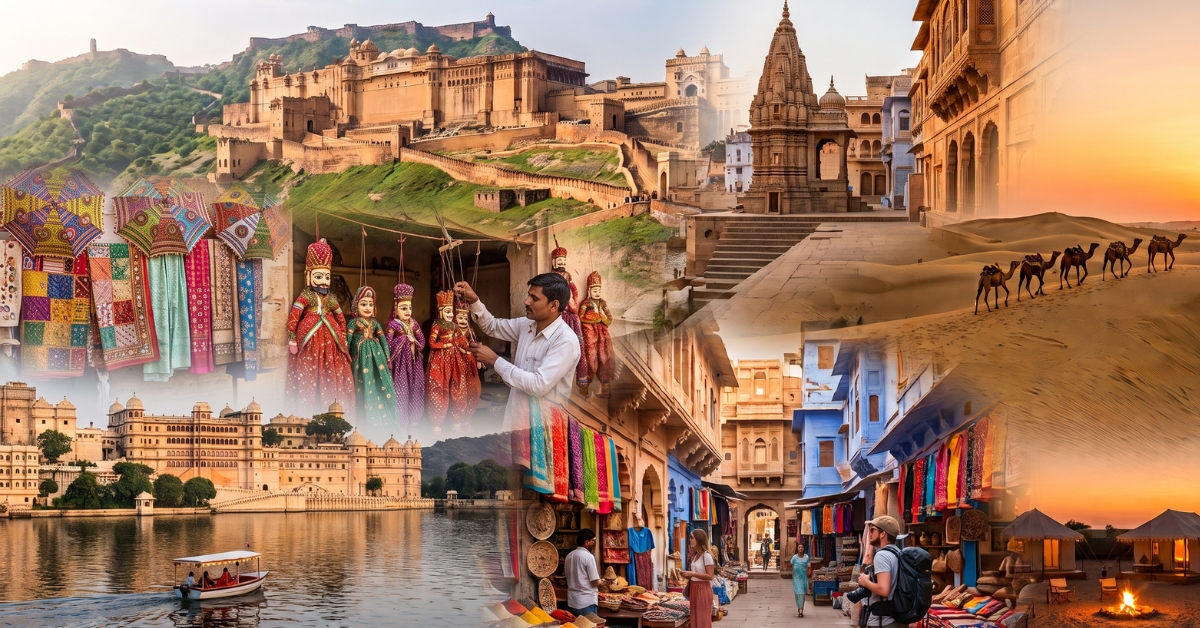
Rajasthan has a way of feeling familiar before you have even been there. You have...
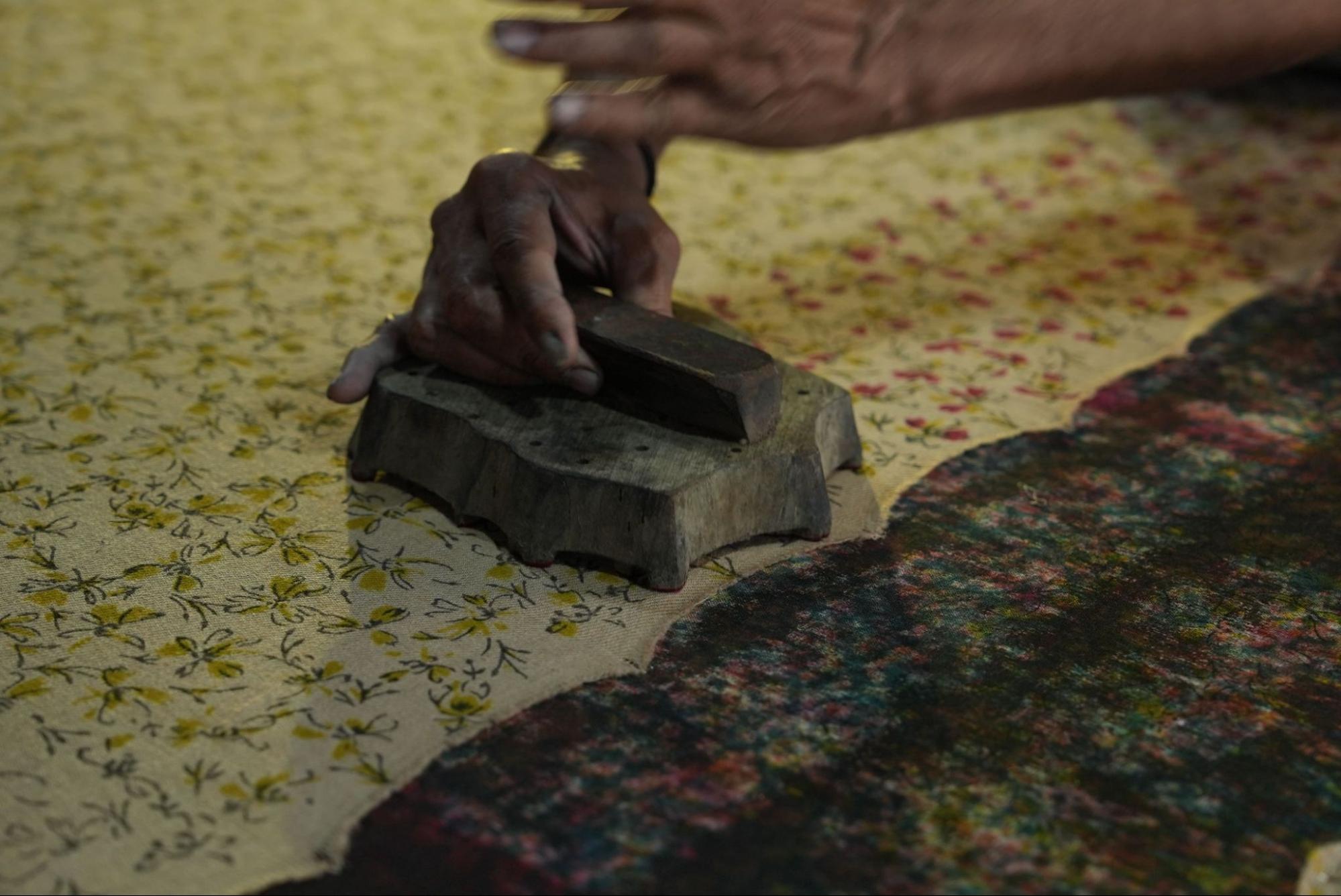
We sat down with master artisan Raj Kumar Pandey, a seventh-generation block-printing expert with over...

Jaipur, the “Pink City of India,” is known for its rich heritage, royal history, exquisite...